



A secure web platform designed to let users participate in federal and district court proceedings remotely while supporting complex jurisdiction-specific processes.
Industry: Legal
- 98% Customer Satisfaction
- 95% Process Accuracy
- $800k Revenue Impact
We Develop
One codebase, both app stores, no compromise on the parts users notice. For 10+ years AppZoro has shipped 250+ products across 30+ industries, from first release through to the versions that carry real user load.
Get Free Consultation









Rated 4.7 out of 5 across verified client reviews.

Listed among leading custom software development companies in the United States.

Verified Atlanta software company, founded inside Atlanta Tech Village in 2016.

Ranked among the top app development agencies in the United States.

Listed among top software development companies in Atlanta, US.
Benefit from deep cross platform experience and a delivery record you can check. Our team builds, migrates and maintains hybrid apps that behave like native ones on the devices your users actually own.
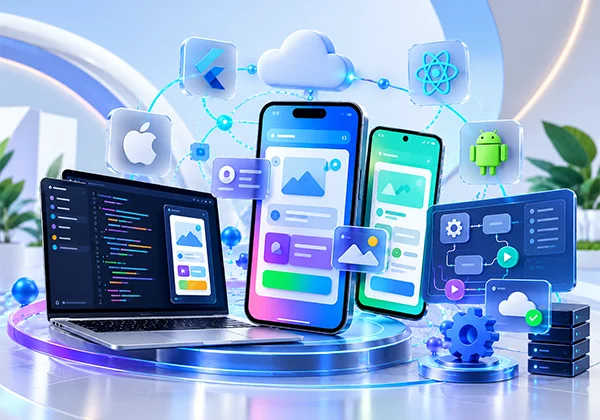
Discovery, design, build, store submission and support, delivered by one team that owns the product from idea to live release.

Shared business logic with platform specific polish, ideal for products that need fast iteration without losing native feel.
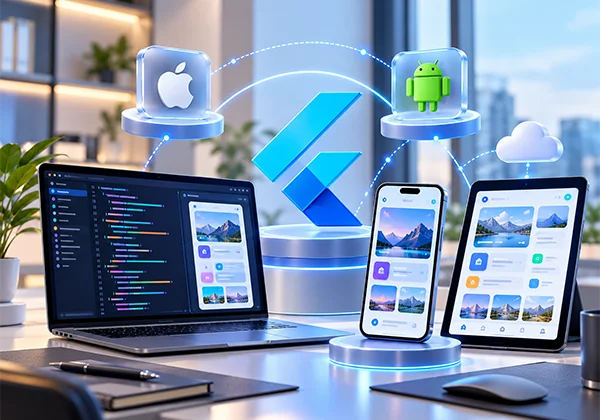
A single codebase compiled to both platforms, built for apps where pixel level design consistency matters more than anything.

Move an ageing native or web app onto a hybrid stack without losing users, data, store ratings or the revenue it already earns.

Authentication, payments, messaging and third party APIs built to carry your app as usage grows past the first few thousand users.

Store compliance, OS version upgrades, crash triage and performance work handled on a schedule rather than after a bad review.
A secure web platform designed to let users participate in federal and district court proceedings remotely while supporting complex jurisdiction-specific processes.
Industry: Legal


A complete rideshare rental platform where drivers can find vehicles, book, pay, and manage insurance and registration requirements from one connected experience.
Industry: Mobility

Apex Textile
We rebuilt the digital experience around how textile buyers search for products and specifications, helping customers reach relevant information with fewer unnecessary steps.
Industry: Manufacturing


A specialized platform connecting law enforcement agencies with qualified off-duty officers while supporting assignments, reporting, custody workflows, and payments.
Industry: Public Safety

Dreambook & Planner
A cross-platform wellness app translating the brand's paper-planning experience into goal setting, mind mapping, habit tracking, and calendar-connected tools.
Industry: Health and Wellness


They grasped what I wanted to accomplish and helped me get there. I'll never go elsewhere for an IT provider.
 Read Steve Thompson's review on Clutch (opens in a new tab)
There's never been a language barrier or an issue with our difference in time zones. Their team has been really great.
Read Mario Gonzales's review on Clutch (opens in a new tab) 

AppZoro made each project feel like it was their baby, and they seemed to care about nothing else.
Read Ed Bolian's review on Clutch (opens in a new tab) 

AppZoro is a young company, and I've seen them grow and get better in the short time we've worked together.
Read Michael Patterson's review on Clutch (opens in a new tab) 

I've been very impressed with the dedication the AppZoro Technologies, Inc. team has to our project.
Read Max Hockley's review on Clutch (opens in a new tab) 
We haven't seen any weaknesses in their work.
Read John Cox's review on Clutch (opens in a new tab) 

Calls and sales are up by at least 20% now that we've launched the site.
Read Paawan Mathur's review on Clutch (opens in a new tab) 
What stands out most is their strong execution and commitment to problem-solving.
Read Cole Sturdevant's review on Clutch (opens in a new tab) 

They go above and beyond to communicate direction and are responsive to feedback.
Read Carey Markey's review on Clutch (opens in a new tab) 

In addition to superb communication, they built a very smooth app with intuitive navigation and a clean interface.
Read Thad Joseph's review on Clutch (opens in a new tab) 

They do great work with integrity.
Read Karen Houghton's review on Clutch (opens in a new tab) Mature, widely supported and backed by a large module ecosystem. The right choice when your team wants JavaScript skills to carry across web and mobile.
Compiled to native ARM code with its own rendering engine, so your design survives intact on every device instead of drifting between platforms.
Web technologies wrapped in a native shell, suited to content heavy and internal apps where delivery speed matters more than heavy animation.
The native bridge layer that gives web built apps access to camera, storage, geolocation and push, with a plugin path for anything custom.
Where hybrid hits a limit, we drop to Swift or Kotlin and write the module ourselves, then expose it cleanly back to the shared codebase.
Node.js, Python, .NET, PostgreSQL and Firebase, deployed on AWS or Azure, built to carry your app from launch load through to scale.
 Healthcare
Patient apps, provider tools, wellness and activity tracking, built with privacy handling appropriate to health data.
Healthcare
Patient apps, provider tools, wellness and activity tracking, built with privacy handling appropriate to health data.
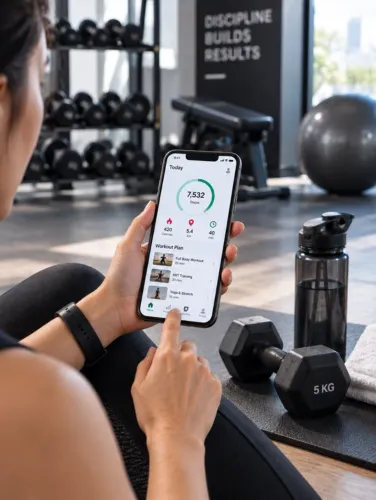 Fitness
Workout tracking, coaching and wearable sync, built around the retention problem every fitness product hits by week three.
Fitness
Workout tracking, coaching and wearable sync, built around the retention problem every fitness product hits by week three.
 Logistics
Dispatch, live tracking, driver apps and fleet visibility. Convoy and Freedom Rideshare both run on this stack.
Logistics
Dispatch, live tracking, driver apps and fleet visibility. Convoy and Freedom Rideshare both run on this stack.
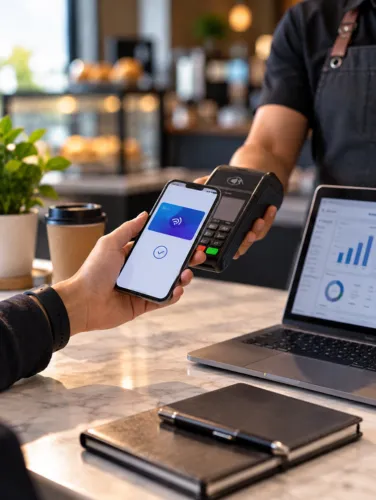 Fintech
Payments, lending, credit and banking front ends, with security and audit requirements handled from architecture onward.
Fintech
Payments, lending, credit and banking front ends, with security and audit requirements handled from architecture onward.
 Real Estate
Listing search, MLS integration, virtual tours and agent tools that work as well in a car as at a desk.
Real Estate
Listing search, MLS integration, virtual tours and agent tools that work as well in a car as at a desk.
 Manufacturing
Floor-level apps for inventory, quality checks and machine data, built to work in plants where connectivity is not guaranteed.
Manufacturing
Floor-level apps for inventory, quality checks and machine data, built to work in plants where connectivity is not guaranteed.
 Entertainment
Streaming platforms, fan engagement, booking tools and digital experiences, built to keep audiences engaged across every screen
Entertainment
Streaming platforms, fan engagement, booking tools and digital experiences, built to keep audiences engaged across every screen
Tell us what the app has to do. We will tell you whether hybrid is the right call, and what it would take.
User Features
Email, phone or social sign in with biometric unlock after the first session, so returning users never queue at a login screen.
Content, products and actions ordered by what the user did last, refreshed without a full reload every time the app opens.
Fast typed search with saved filters and recent results, built to stay responsive on mid range Android handsets, not only flagships.
Chat, support threads and read receipts inside the app, so users never leave to email you and then forget to come back.
Segmented, permission respecting notifications with deep links that open the exact screen the message was actually about.
Core screens and recent data cached on device, with queued actions that sync the moment the connection comes back up.
Business Features
One web console for users, content, pricing and permissions, so your team changes the app without waiting on a release.
Permissions mapped to real job roles, with every change stamped by user and time for support reviews and audits later.
Stripe, Razorpay or in app purchase flows with refunds, invoices and renewal handling built in rather than bolted on after.
Events instrumented from the first build, so you can see where users drop off instead of guessing from store ratings.
Screens, banners and copy editable from the backend, giving marketing a release cycle measured in minutes rather than weeks.
CRM, ERP, helpdesk and marketing tools connected through documented APIs, with retries and failure handling designed in.
Device Features
Capture, crop and upload with compression handled on device, so large files do not stall on a weak mobile connection.
Background location, geofencing and turn by turn handoff, tuned so the feature does not quietly drain the battery.
Face and fingerprint unlock backed by the platform keychain, with a passcode fallback that meets your security policy.
Pairing with wearables, printers, scanners and payment terminals through native modules we write and maintain ourselves.
Step, motion and health data read through HealthKit and Health Connect, with consent handled the way each store requires.
Encrypted on device storage with conflict rules, so two people editing the same record offline does not cost you data.

We have refined this across 250+ products in 30+ industries. It is how we keep hybrid builds moving at speed without skipping the decisions that get expensive to reverse later.

We map the features, the devices and the load before anyone writes code, then tell you honestly whether hybrid, native or a mix of both is the right answer.
React Native, Flutter or Ionic chosen against your feature list, your team's skills and the modules the product will depend on in year two.
One component library that respects both platform conventions, prototyped and tested with real users before engineering starts building it.
State management, offline strategy, data model and API contracts agreed up front, because these are the parts nobody rewrites cheaply later.
Two week sprints against a working build you can install, so progress is something you hold in your hand rather than read in a status report.
Automated and manual testing across real handsets, OS versions and network conditions, including the slow connections your users will hit.
Store submission, staged rollout, crash monitoring and a fixed improvement cadence once the app is live and carrying actual traffic.
| Feature | Hybrid | Native | Best Fit |
|---|---|---|---|
| Codebase | One shared codebase for iOS and Android. | Separate codebase per platform. | Hybrid for most products. |
| Time to Launch | Faster, a single team ships both stores at once. | Slower, two tracks running in parallel. | Hybrid. |
| Build Cost | Lower, roughly one build instead of two. | Higher, platform work is duplicated. | Hybrid. |
| UI Consistency | Near identical across both platforms. | Fully native look and feel per platform. | Depends on brand. |
| Performance | Strong for most apps, close to native in daily use. | Highest, especially under heavy graphics load. | Native for games and AR. |
| Device Access | Full access through native modules and plugins. | Direct access with no bridge layer. | Native for deep hardware work. |
| Maintenance | One update path, one release cycle to manage. | Two codebases to patch and keep aligned. | Hybrid. |
| Team Required | One cross platform team. | Separate iOS and Android specialists. | Hybrid. |
| Best for | MVPs, content, commerce, fintech, internal tools. | Games, AR, heavy video, hardware led products. | Decided at discovery. |

A single team, a single release cycle and a single backlog. Our hybrid app development services are built to keep that advantage as the product grows past version one.
Talk to Our App ExpertsEvery feature is written once and shipped to both platforms together. Your backlog stops splitting in two, your QA stops testing the same logic twice, and iOS users stop waiting a release behind Android.
You fund one engineering team instead of two, and you patch one codebase when an OS update lands. The saving compounds after launch, because maintenance runs for years while the initial build runs for months.
Hybrid application development services cut the distance between a decision and a live release. Most products reach a testable build weeks earlier, which matters when you are validating demand rather than defending share.
One design system renders the same way on both platforms, so your brand does not quietly drift between an iPhone and a mid range Android. Support gets easier too, because every user is describing the same screen.
Camera, location, biometrics, Bluetooth and push all work through native modules. Where a plugin does not exist, we write one, so hybrid never becomes the reason a feature gets cut from the roadmap.
Standard frameworks mean a larger hiring pool and documentation another team can pick up. You are not locked into one agency because only we understand how the thing was built.

We architect hybrid apps for the version you will be running in three years, not only the one you launch next quarter. The difference shows up in how cheaply the product changes.
You talk to the people writing your app. Our 50+ developers have shipped 250+ products across 30+ industries, and the ones on your project are the ones answering your questions.
We will tell you when native is the better call, even though it costs us the easier sell. As a hybrid app development company we would rather lose a project than build the wrong architecture for it.
When a feature needs more than a plugin can give, we write the Swift or Kotlin module ourselves. Hybrid is a starting architecture for us, never a ceiling on what the product can do.
Startup time, list scrolling and memory use are tested on real mid range devices throughout the build, because that is what most of your users are holding when they judge the app.
Encrypted storage, secure keychain use, permission handling and privacy manifests prepared before submission, so review rejections do not push your launch date by two weeks.
A 4.7 Clutch rating built on clients who kept working with us. Post launch you get crash monitoring, OS upgrade handling and a fixed improvement cadence with documentation your team can use.
Hybrid app pricing moves on four things: feature depth, integrations, design detail and the compliance your sector demands.
$15k to $25k
A focused MVP or single purpose app with core screens, basic auth and light integrations. Built on one codebase for both stores, suited to validating demand before you commit to a larger roadmap.
$30k to $50k
Multi flow apps with richer UI, payments, analytics, admin tooling and role based access across user types. This is where most funded startups and established SMB products sit on a hybrid stack.
$50k to $70k+
Products with custom native modules, offline sync, real time features, heavy third party integration and ongoing optimisation after launch. Compliance heavy sectors usually land in this band.

Share your project scope and timeline to get a clear roadmap and estimated quote.
Request A QuoteDiscovery, UX and design systems, architecture, engineering, QA across real devices, store submission and post launch support. In practice that means new builds in React Native, Flutter or Ionic, migrations from native or web, backend and API work, and ongoing release management. You can engage us for the full product or for one layer your in house team cannot resource right now.
Hybrid suits most products, including commerce, fintech, content, booking and internal tools. Native still wins for games, augmented reality, heavy video processing and hardware led products. We run that comparison against your actual feature list during discovery and tell you plainly which way it falls, even when the honest answer costs us the larger project.
Ask who writes the code and whether you speak to them directly. Ask for apps still running two years after launch, not screenshots. Ask how they handle a feature no plugin covers, because that answer separates a real hybrid app development company from a team that stops at whatever the framework ships with. Then check their reviews on a platform that verifies them.
Yes, all of it. Camera, GPS, Bluetooth, NFC, biometrics and health data reach the app through native modules, and where no plugin exists we write one in Swift or Kotlin and maintain it. The real question is rarely whether a feature is possible. It is whether the ecosystem already covers it or we need to build that bridge ourselves.
A focused MVP typically runs eight to fourteen weeks to a store ready build. A multi flow product with payments, admin tooling and integrations usually takes four to six months. Complex products with custom native modules and compliance requirements run longer. We give a phased plan at proposal stage with the assumptions written down, so you can see exactly what would move the date.
We do this often. We audit the current app, map what must carry over, and phase the migration so users, data, listings and ratings survive the move. The shared codebase is introduced screen by screen rather than through one cutover that takes the live app down. Most users never notice anything beyond a normal update.
We have shipped 250+ products across 30+ industries in 10+ years with 50+ in-house developers, and our 4.7 Clutch rating comes from verified client interviews. You talk to the engineers building your app rather than an account layer. Source code, documentation and store accounts are yours from day one, so another team could take over without us.
Book your free consultation with a technical lead, not a salesperson.