


A secure web platform designed to let users participate in federal and district court proceedings remotely while supporting complex jurisdiction-specific processes.
Industry: Legal
- 98% Customer Satisfaction
- 95% Process Accuracy
- $800k Revenue Impact

Fintech
A payment that fails at 2am costs you money, customers and an explanation to your regulator. AppZoro builds the platforms that lenders, payment companies and insurers depend on, with compliance designed in from the first sprint.
Get Free Consultation300+ Happy Clients Worldwide














































Custom fintech software development services for products that do not fit an off the shelf core, built on your architecture and owned entirely by you.

Double entry ledgers, account structures and posting engines that balance under load, with reconciliation you can prove to the cent at any hour.

Authorisation, settlement, reconciliation and dispute handling across acquirers and processors, built to fail safely rather than fail silently.

Origination, decisioning, servicing and collections in one system, with rules your risk team can change without filing an engineering ticket.

KYC, sanctions screening, transaction monitoring and case management, designed so evidence collects itself as the system runs.

Warehouses, pipelines and regulatory reporting built once and correctly, so month end close and examiner requests stop consuming your team.
 Digital Banking
Account opening, balances, transfers and servicing on a core you control, whether that is a modern banking platform or your existing system.
Digital Banking
Account opening, balances, transfers and servicing on a core you control, whether that is a modern banking platform or your existing system.
 Payments and Wallets
Stored value accounts, domestic and cross border rails, and settlement logic that reconciles cleanly at the end of every cycle.
Payments and Wallets
Stored value accounts, domestic and cross border rails, and settlement logic that reconciles cleanly at the end of every cycle.
 Lending and Credit
Fintech solution development for origination and servicing, with decisioning your risk team owns and an audit trail on every outcome.
Lending and Credit
Fintech solution development for origination and servicing, with decisioning your risk team owns and an audit trail on every outcome.
 Wealth and Insurance
Portfolio, policy and claims systems with suitability checks, disclosures and reporting handled inside the platform rather than beside it.
Wealth and Insurance
Portfolio, policy and claims systems with suitability checks, disclosures and reporting handled inside the platform rather than beside it.
 Compliance and Risk
Screening, monitoring and case management built into the product, so alerts reach analysts with the context needed to clear them.
Compliance and Risk
Screening, monitoring and case management built into the product, so alerts reach analysts with the context needed to clear them.
A secure web platform designed to let users participate in federal and district court proceedings remotely while supporting complex jurisdiction-specific processes.
Industry: Legal


A complete rideshare rental platform where drivers can find vehicles, book, pay, and manage insurance and registration requirements from one connected experience.
Industry: Mobility

Apex Textile
We rebuilt the digital experience around how textile buyers search for products and specifications, helping customers reach relevant information with fewer unnecessary steps.
Industry: Manufacturing


A specialized platform connecting law enforcement agencies with qualified off-duty officers while supporting assignments, reporting, custody workflows, and payments.
Industry: Public Safety

Dreambook & Planner
A cross-platform wellness app translating the brand's paper-planning experience into goal setting, mind mapping, habit tracking, and calendar-connected tools.
Industry: Health and Wellness


They grasped what I wanted to accomplish and helped me get there. I'll never go elsewhere for an IT provider.
 Read Steve Thompson's review on Clutch (opens in a new tab)
There's never been a language barrier or an issue with our difference in time zones. Their team has been really great.
Read Mario Gonzales's review on Clutch (opens in a new tab) 

AppZoro made each project feel like it was their baby, and they seemed to care about nothing else.
Read Ed Bolian's review on Clutch (opens in a new tab) 

AppZoro is a young company, and I've seen them grow and get better in the short time we've worked together.
Read Michael Patterson's review on Clutch (opens in a new tab) 

I've been very impressed with the dedication the AppZoro Technologies, Inc. team has to our project.
Read Max Hockley's review on Clutch (opens in a new tab) 
We haven't seen any weaknesses in their work.
Read John Cox's review on Clutch (opens in a new tab) 
Calls and sales are up by at least 20% now that we've launched the site.
Read Paawan Mathur's review on Clutch (opens in a new tab) 
What stands out most is their strong execution and commitment to problem-solving.
Read Cole Sturdevant's review on Clutch (opens in a new tab) 

They go above and beyond to communicate direction and are responsive to feedback.
Read Carey Markey's review on Clutch (opens in a new tab) 
In addition to superb communication, they built a very smooth app with intuitive navigation and a clean interface.
Read Thad Joseph's review on Clutch (opens in a new tab) 
They do great work with integrity.
Read Karen Houghton's review on Clutch (opens in a new tab) Most fintech platforms do not fail on features. They fail when a security review lands two weeks before launch and the architecture cannot answer it.
We map each build to the frameworks that apply to you, whether that is PCI DSS, SOC 2, GDPR, PSD2 and strong customer authentication, GLBA or state money transmitter rules. You receive the control matrix and the test results.

Legacy cores, manual reconciliation and a release process nobody trusts. We migrate platforms service by service, with no weekend cutover and no frozen roadmap.
Talk to Our Experts Today
Stripe, Adyen, Checkout.com, Marqeta, Galileo and Lithic, wired with idempotent retries and authorisation logic that responds inside the network timeout.

Mambu, Thought Machine, Unit and Treasury Prime, paired with a double entry ledger of your own so you are never asking a third party what your balance is.

Plaid, MX, Tink and Yodlee for account linking, balance checks and income verification, with consent capture and revocation handled to the standard auditors expect.

Persona, Onfido, Alloy and ComplyAdvantage, orchestrated so a failed check routes into review with context attached rather than dropping the applicant.
You need faster decisions without loosening risk, and a servicing stack your collections team can operate without three spreadsheets open beside it.
You are launching or scaling a payments product and need issuing, ledger, settlement and dispute handling built the first time correctly.
You are digitising quoting, claims or portfolio servicing while keeping suitability, disclosure and reporting duties fully intact.
You need a platform a sponsor bank will review and an investor will fund, built by a team that has passed that review before.
You are embedding payments, lending or wallets into an existing product and need the regulated parts handled by people who have done it.
You have a core that works and a stack around it that does not. We migrate service by service, with the old system live until the new one earns the traffic.
You do not need to arrive knowing which framework you want, because that decision depends on your users, your team and what you will maintain in three years without us. We work across mobile, web, cloud and AI and we will happily work inside a stack you already own.
 Jetpack Compose
 Kotlin
 SwiftUI
 Flutter
 React
React
 Swift
Swift
 AWS
AWS
 Azure
Azure
 Docker
 Objective-C
 Terraform
 Java
Java
 Google
 Grok
Grok
 Hugging Face
 Milvus
 Pinecone
 OpenAI
 Anthropic Claude
 GCP
GCP
 GitHub Actions
 PyTorch
 REST API
 AWS Bedrock
How We Work
Every stage has an owner and an exit criterion. The compliance and integration work sits early, because that is what moves launch dates.
AI is already cutting fraud losses, sharpening credit decisions and clearing back office work. We will help you put it where it earns the most.

Transactions scored in flight against behavioural and device signals, catching takeover and mule activity without adding friction.

Cash flow and bureau data combined into decisions that carry reason codes, so adverse action notices write themselves.
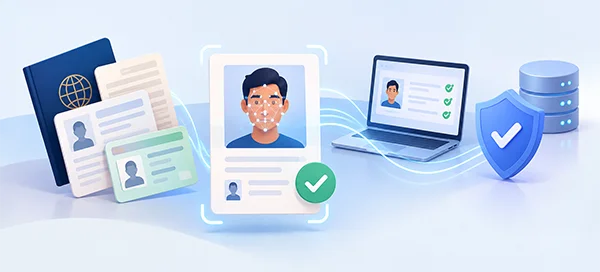
Extraction and verification across identity documents, statements and pay slips, with a human kept in the loop on edge cases.

Alert scoring and narrative drafting that shortens investigation time per case, with the audit trail examiners ask for.
Fraud Detection and Scoring. Models trained on your own transaction history, deployed with monitoring, versioning and a rollback path, so a bad model never runs unnoticed for a week.
Real time transaction scoring Monitored and versioned models Rollback path on every release
We audit what you run today and establish a risk-aligned architecture and roadmap for baseline cloud security.
Hardening and remediation expressed as code, so the fix survives the next environment rebuild.
Controls mapped to the regime you answer to, with the evidence collected as you go rather than before an audit.
Drift, exposure and dependency alerts routed to the people who can act on them, with the noise turned down.
Financial platforms get judged twice, once by customers and once by examiners. Building for both at the same time is a different discipline from building a fast consumer product, and it is the discipline we have spent the last decade practising as a fintech development company.

The engineers on your first call write the code, and the same team stays on the account after launch.

Threat modelling, encryption boundaries and audit logging are architecture decisions, made in week one.

We have already built against the cores, processors and KYC vendors you are currently evaluating.

Repositories, pipelines and cloud accounts are in your name from the first commit. Nothing depends on us.
Core platform work rather than just the interface: ledgers, transaction processing, reconciliation, reporting, risk and compliance tooling, admin consoles and the integration layer to banking and payment rails. Front end apps sit on top of that, and we build those too, but the platform is where the work is.
The app is what a customer sees. The software is what settles, reconciles, reports and survives an audit. Most fintech failures happen in the second layer, under load or during month end close, not in the interface.
Usually yes, in stages. We put an API layer over the existing core, move functions out one at a time, and keep both running until the new path is proven. Full replacement of a live ledger in one cutover is a risk very few institutions should accept.
Whatever applies to your licence and markets: PCI DSS for card data, SOC 2 controls, GLBA, state money transmitter requirements, and GDPR where EU data is involved. We build the controls, logging and evidence trail. Your compliance team or counsel defines the obligations.
We have built across lending, payments, and treasury and operations tooling. The common engineering problem is the same in all three: accurate state, correct reconciliation and a complete audit trail. Domain rules differ, and we work with your subject matter experts on those rather than assuming them.
Event driven architecture, queue backed processing, idempotent transaction handling and a data model built for reconciliation rather than convenience. We load test against your projected peak plus headroom. Systems that work fine at a thousand transactions a day fail at a hundred thousand for reasons that are structural, not performance tuning.
Yes. Financial systems need monitoring, on call coverage and a change process, not ad hoc fixes. Support agreements cover response and resolution targets, release management and a scheduled security update cycle. Most fintech clients stay on support permanently.
With a scoping phase covering your current systems, data model, compliance surface and integration dependencies. That produces an architecture, a phased plan and a written estimate by phase. For platform work this step is not optional, because the cost of discovering a constraint mid build is far higher than the cost of finding it first.
Book your free consultation with a technical lead, not a salesperson.


